The climbing gym industry is still relatively young. The first gym opened in Belgium in 1986, followed by the first North American facility in Seattle the next year. What began as training boards in garages and sheds has grown into a global industry, producing some of the largest indoor recreational facilities in the world and an entire ecosystem of manufacturers, designers, and service providers.
Today, more than 870 commercial climbing gyms operate across North America alone. While the industry continues to expand, recent data suggests that new development and revenue growth began to soften in 2025 as construction costs, financing pressures, and operating expenses increased.
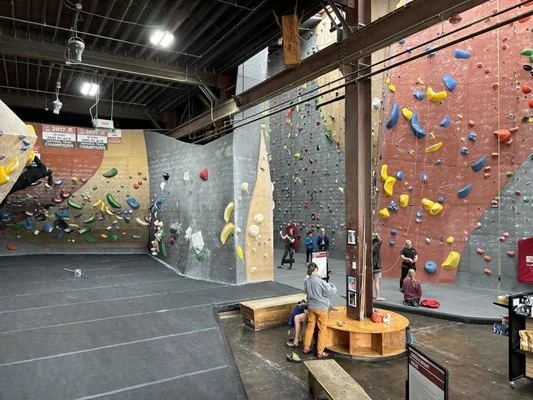
Vertical World
The first commercial climbing gym in the United States.
As the industry matures, competition grows and capital tightens. The margin for error in new gym development is shrinking. Decisions around design sequencing, scope definition, and consulting now carry greater consequence than they once did. In this environment, many first-time founders are discovering that early planning pays dividends later.
For many new gym owners, this is also the first time managing a project of this scale. They are navigating unfamiliar territory: commercial leases, permitting processes, lender requirements, construction timelines, and vendor coordination, often simultaneously. Early decisions are frequently made with incomplete information and under pressure to move quickly. When sequencing and scope are not clearly established from the outset, this pressure can compound downstream risk and amplify uncertainty as projects move forward.
Patterns emerge quickly when examining new facility developments. Challenges rarely stem from the climbing wall itself. Instead, they arise from the systems surrounding it: HVAC loads and air distribution, egress and safety requirements, permitting timelines, tenant improvement negotiations, and working capital gaps. These factors often drive costly changes during construction. When wall design is introduced late in a process already constrained by architectural and financial decisions, scope and cost uncertainty tend to persist far longer than necessary.
In most commercial construction sectors, design and construction are intentionally separated. Clients typically begin by selecting an architect or designer whose experience aligns with their goals. Together, they develop a design that responds to the site, program, and operational needs of the project. Once complete, that design is bid out to contractors evaluated on cost, schedule, and expertise. This structure allows clients to clarify scope, compare options, and make informed decisions before committing to construction.
Climbing gym construction often follows a different sequence. Sales, design, manufacturing, and installation are frequently bundled under a single climbing wall company. Gym owners are commonly asked to select a wall builder before a complete facility design or operational vision has been developed. While elements such as flooring, holds, and equipment are typically sourced independently, the most defining feature of the gym is often locked in early under one provider, sometimes before final scope or layout decisions are confirmed.
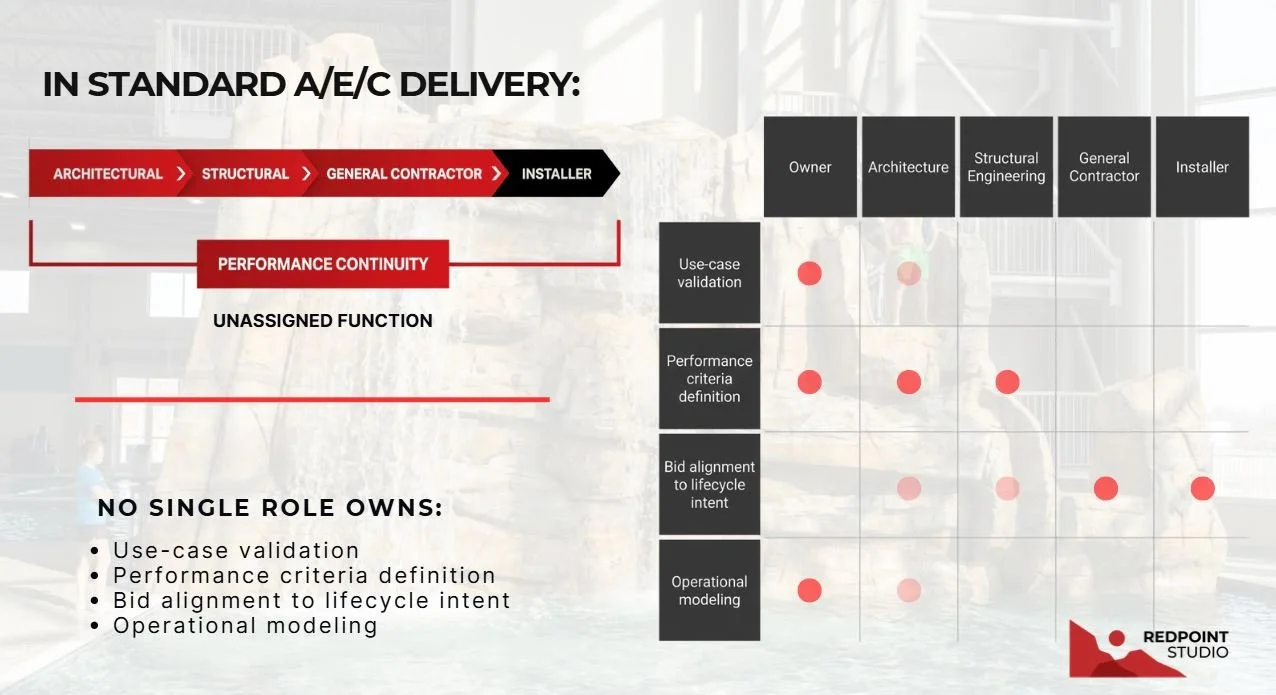
This sequencing can create unforeseen costs and downstream changes that affect a gym’s financial performance. In many cases, a finalized wall design is not achieved until after a construction agreement is signed. As a result, owners may not fully understand what they are building, or the challenges it introduces, until after key decisions have already been made. This complicates bidding, limits early cost certainty, and increases the likelihood of scope creep.
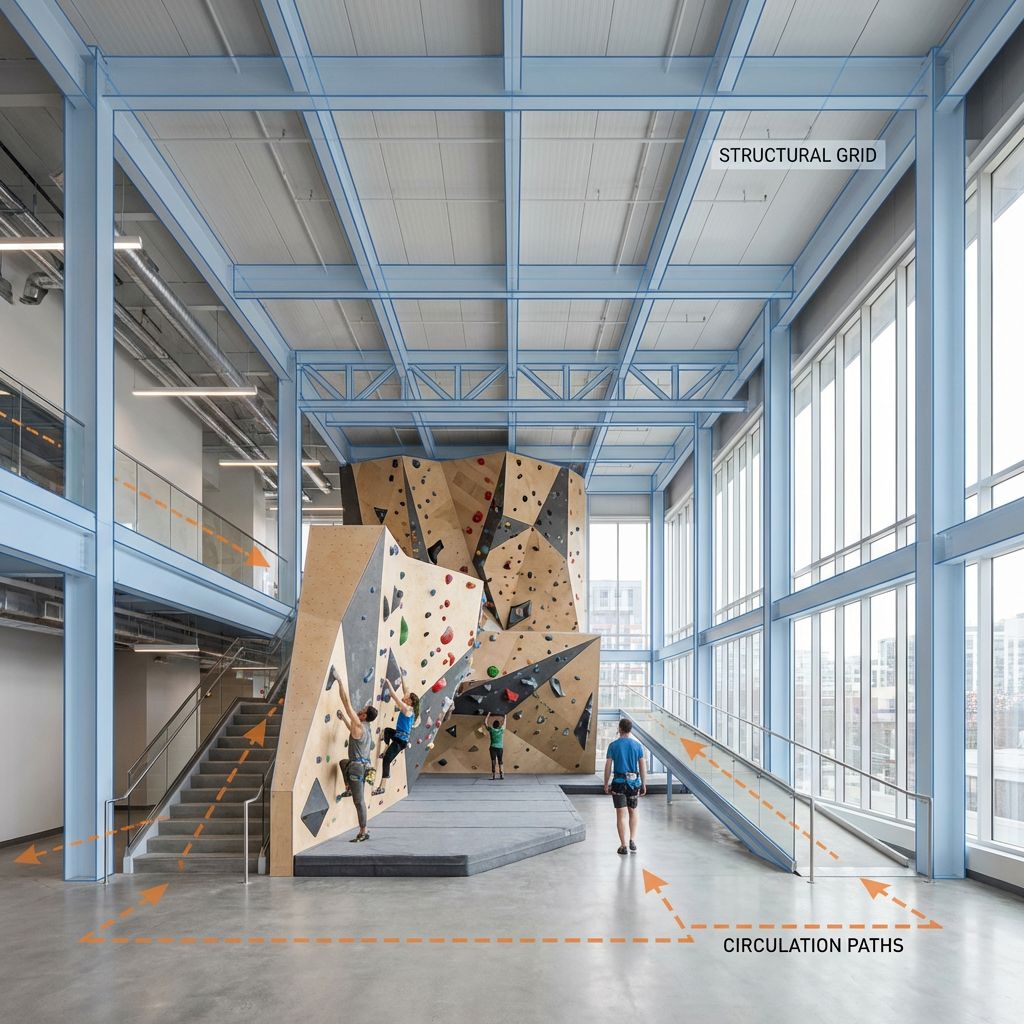
Wall geometry decisions directly influence ceiling heights, structural loading, mechanical distribution, fall zone layouts, and circulation. When these decisions are deferred until after architectural plans or lease negotiations are complete, compromises often follow, whether that means redesigning ductwork, reinforcing structure after the fact, or revising layouts to meet safety requirements. Each adjustment introduces additional cost, time, and coordination challenges that could have been mitigated through earlier integration.
Separating design from construction helps resolve many of these challenges. A finalized design establishes scope, intent, and priorities before a builder is selected. It gives gym owners clarity about what they are building and how it will function long before construction begins. With a clear vision in place, builders can be compared on equal footing, costs can be evaluated more accurately, and tradeoffs can be assessed deliberately rather than reactively.
What is often missing in early gym development is not expertise, but integration. Architects, wall builders, consultants, and contractors each bring specialized knowledge, yet no single role is typically responsible for aligning these inputs early in the process. As a result, decisions are made in isolation rather than sequence. In more mature construction sectors, this integrative layer is recognized as essential to managing complexity before it becomes costly.
Separating design and construction also allows for greater creative flexibility. Under many current models, founders are limited to choosing a company that both designs and builds walls that appeal to them stylistically. In practice, an owner may prefer the design language of one builder but the fabrication quality or materials of another. When design and construction are decoupled, owners gain more choice, more control, and more room to shape a gym that reflects their priorities rather than a bundled offering.
Early design clarity also supports marketing and branding efforts, which often take longer than new owners anticipate. Having a fully formed design early provides tangible material for outreach, leasing conversations, and community engagement well before doors open.
Independent designers and architects typically operate with a primary obligation to represent the client. Their role is not to sell a specific product, but to translate an owner’s goals, values, and operational needs into a cohesive plan. Through this collaborative process, founders become active participants in shaping their gym rather than adapting to a predefined solution. Creative vision and financial scope are developed simultaneously, helping owners understand not only what they want to build, but what they can realistically support.
This clarity directly addresses one of the most common sources of anxiety for new gym founders: uncertainty. In a tightening capital environment, budget overruns, timeline delays, and scope changes carry greater risk. Discounting or bundled pricing models may reduce upfront numbers, but they rarely reduce uncertainty and can create unforeseen costs later. Lenders, landlords, and insurers tend to prioritize defined scope, documented sequencing, and realistic projections over visual appeal or early marketing momentum.
From a construction standpoint, completed designs also reduce the likelihood of change orders and pricing adjustments during the build. Builders are able to bid with greater confidence, and owners are better positioned to manage risk, an increasingly critical factor as development margins narrow. In projects involving new construction, incorporating wall design early can also streamline coordination and reduce costly structural revisions. When wall geometry is finalized early, supporting structure can be integrated directly into the building, avoiding expensive retrofits and redundant work.

One commonly cited challenge associated with bundled delivery models is overbuilding. Wall square footage represents a significant capital expense, and in integrated systems, additional surface area can directly increase project cost. Without clearly defined constraints, this dynamic can lead to gyms that prioritize climbing terrain at the expense of circulation, rest areas, storage, and social space.
More wall does not automatically create a better gym. Successful facilities balance climbing density with room to move, observe, recover, and connect. When walls dominate the floor plan, gyms can feel crowded and operationally inefficient, even when total climbing surface is substantial. For many members, a local climbing gym functions as a third space alongside home and work. In practice, the spaces between the walls are often as important as the walls themselves.
As the climbing gym industry continues to mature, specialization is likely to increase. Visibility may open doors, but long-term viability depends on competence, coordination, and clarity. The growth of climbing has produced a robust industry, but its future will depend on refining the processes that support development. The most resilient projects tend to be those where roles are clearly defined early, incentives are aligned, and founders understand what comes next.
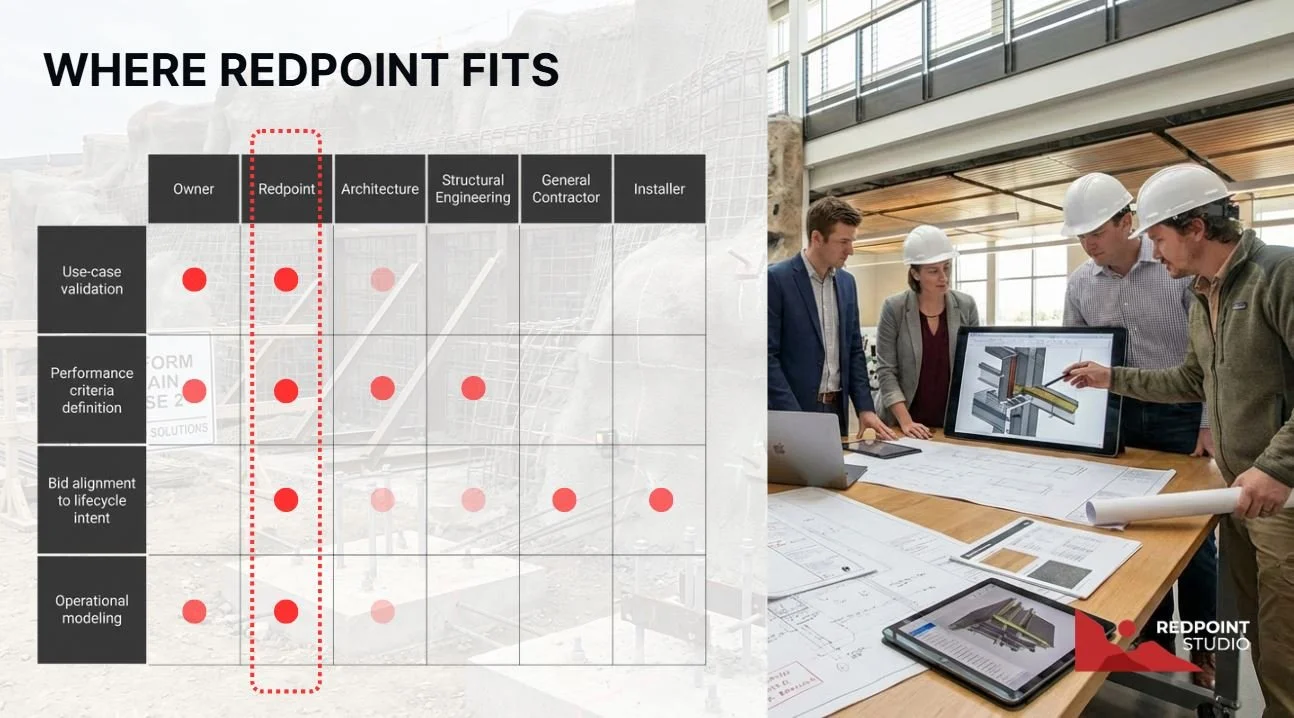
The climbing wall will always remain central to the gym experience. But as facilities grow larger and development conditions become more demanding, the methods used to design and deliver them matter just as much. In a maturing market, clarity is likely to outperform spectacle, and approaches that prioritize early integration and clear representation of the owner’s interests may shape the industry’s next phase of growth and long-term stability.